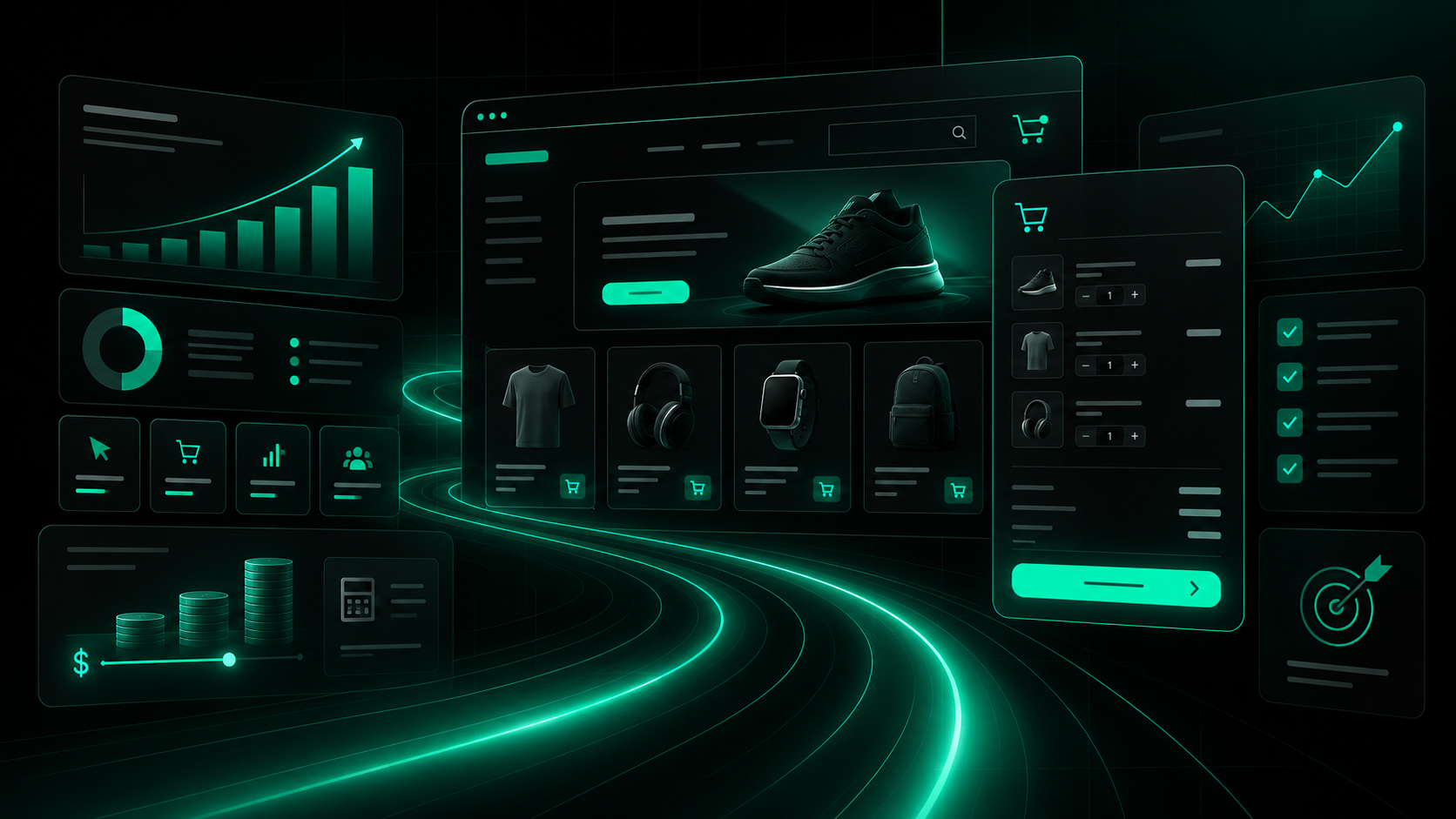

An e-commerce website cost is shaped by far more than the number of products. Two stores with 200 products can require completely different levels of work depending on catalogue structure, variations, shipping, payments, integrations and how much help customers need before making a purchase.
The main factors that affect e-commerce pricing
- Catalogue complexity: categories, variants, attributes, bundles and product relationships.
- Design and UX: navigation, search, filtering, product pages, cart and checkout experience.
- Payments: gateway setup, local payment methods and testing.
- Shipping: rates, zones, pickup points, carrier integrations and free-shipping logic.
- Data migration: existing products, customers and orders may need to be cleaned and transferred.
- Business integrations: ERP, invoicing, CRM, email marketing or fulfilment tools.
- Languages and markets: multilingual stores and international selling add operational as well as technical considerations.
Why product count is a poor pricing shortcut
A catalogue can contain hundreds of simple products imported from clean data, while a smaller catalogue can require complex variants, custom fields, product photography, copywriting and manual configuration. The work required to create a reliable buying journey matters more than the headline number of SKUs.
What should be included in the project?
A serious e-commerce scope should consider catalogue architecture, responsive design, product templates, search/filtering, cart and checkout, transactional emails, payments, shipping, analytics, SEO foundations, legal pages and launch testing. Training and post-launch support should also be explicit.
Platform choice comes after requirements
WooCommerce, Shopify and other platforms each solve different problems well. Choosing one before understanding operations, integrations and content can create avoidable constraints. Start with how the business sells and manages orders, then select the technology.
Budget for the store after launch
E-commerce is ongoing. Hosting, updates, support, campaigns, product content, conversion improvements and new integrations should be considered part of the operating model rather than unexpected future costs.
Explore our e-commerce web design approach or discuss your store requirements before deciding on a platform.